The Seminar Of Your Choice Included
From fundamentals to Master Certification — one purchase unlocks everything.
Start Seminar and finish in under 9 days for live credit
(Live credit for TMR 1-3 for all professions except massage therapist who receive Live Online Credit only - see video for details)
Get home study/online credit if course completed in more than 9 days. MTs your association does not allow home study credit - see video for details
Start any course at your convenience
Time limit to take course does not expire.
Implement techniques immediately in your practice
As a fomer math teacher I was flown all over the country to learn how to teach other teachers how to get students to be able to apply what they learn.
The Online Seminars use what is called - Apprentice Style Learning... which is the premiere way to teach so students leave with the ability to apply what is taught right away.
Each student is taught by the creator himself through 2-5 min video demonstrations, followed by student practice, then adequate time for constructive feedback
It will feel like you have me looking over your shoulder helping you every step of the way.
Con Ed Approved For:
Physical Therapists & Assistants
Occupational Therapists & Assistants
Athletic Trainers
Chiropractors
Massage Therapists
Nurses
Click To See Approvals
Also Recommended For:
Physicians
Physician Assistants
Dentists
Sport Coaches
Personal Trainers
Physical Therapists & Assistants
Occupational Therapists & Assistants
Athletic Trainers
Chiropractors
Massage Therapists - able to get Live Online Credit Only
Nurses
Physicians
Physician Assistants
Dentists
Sports Coaches
Personal Trainers
Bank 112 CEU credits immediately (16 credits per level)
Retake any course for fresh credits any new 2 year cycle.
Save thousands on future continuing education
Start any course instantly - no set schedules
Choose between live credit (<9 days) or home study format
Access courses 24/7 from any device
Pause, rewind, and review at your pace
Personal guidance from Tom Dalonzo-Baker
Get your tough cases solved
Fast-track your mastery with expert mentoring
Review techniques anytime you need a refresh
Download all course materials and resources
Stay updated as new content is added
Practice at your own pace
Become A TMR Affiliate - At No Extra Cost
Earn 40% commission if you refer general public
Earn 20% commission if you refer a clinician
Access exclusive training and support
Build additional revenue streams
Share successful outcomes with your network
16 Credit Hrs Each
You will have lifetime unlimited continuing education.
Each Seminar is worth 16 credit hours and there are 7 of them you can purchase.
You can retake whichever one you purchase anytime and receive credit again and again as long as they are NOT taken in the same 2 year CEU cycle.
This is also great for those times you need those last minute CEU's you forgot to get.
Our courses can be taken as Live Credit if done in 9 days or less for all professions (except massage therapists)
Massage Therapist you only receive Live Online Credit.
If you want to take longer than 9 days then you will receive home study/online credit.
Massage therapists you are not allowed to get credit for home study. So you can take longer than 9 days, however you won't receive Cont Ed credit
Cont Ed credit is explained in more detail in video on this page under the Section titled:
"The Most Flexible Continuing Education You'll Ever Invest In"
Go Watch The Video!
You will have Lifetime Online Access to this training
You will have unlimited lifetime help via our App which allows calls, texts, videos and picture of daily note forms from the Founder of Total Motion Release (Tom Dalonzo-Baker). You will be in communication with me during each lesson of the seminar and afterwards when you treat patients.
The Clear 7-Step Routine for Any Condition
In Total Motion Release, the Clear 7-Step Routine is designed to work for every condition—whether it’s orthopedic, neurological, pediatric, acute, or chronic.
This routine covers all the bases and stays the same regardless of the issue you’re addressing.
You’ll practice the routine in two key body positions until it becomes second nature, giving you consistent, predictable results no matter the condition.
Each of the 15 lessons builds on the last, helping you unlock deeper restriction levels as you go.
Understanding Tissue Function
The Clear 7-Step Routine is based on a core principle of how tissue functions.
You’ll learn tissue moves in only two directions to release tension and pain.
Once you understand this, you’ll see why the routine is so effective across various conditions.
The Role of the 9 Tissues in Pain Relief
You’ll dive into how different tissues respond to pain.
Specifically, 7 types of tissues respond best when they shorten (moving into comfort), and 2 prefer lengthening (moving into restriction).
This understanding will help you approach pain and restrictions in a more targeted way.
6 Core Movements Behind All Motion
What might surprise you is that all body movements come from just 6 basic motions.
These 6 core movements, combined with 4 directions and 3 joint positions, form the foundation of every motion.
We call these the FAB 6 and Super 6 (regulars and alternates).
Mastering these significantly shortens the time it takes to get a result.
The Power of the 4 Opposites
The power of the 4 Opposites is a major part of TMR.
You’ll learn how to use the 4 opposite motions to uncover hidden restrictions, find the parts of the body that move the best, and discover more potential solutions to any condition.
Quick 3-Segment Body Scan
You’ll learn a simple, quick body scan broken into 3 segments.
This method lets you observe how different body parts interact—like a pulley and lever system—helping you pinpoint the connections that cause or relieve pain.
Focusing on 4 Body Regions
To get long-lasting results, it’s important to address all four key regions of the body, not just the painful area.
Focusing only on the injured area uses just 12.5% of the body’s healing potential.
By working with the 3 non-painful regions and their good sided movement, you’ll witness the body’s interconnectedness and how quickly it can impact the problem area.
Adjusting with 3 Proven Rules
You will learn 3 simple, effective rules for adjusting the routine based on a patient’s response—whether they improve, stay the same, or get worse.
These rules cover all possible outcomes during treatment and are clearly outlined on a single sheet for easy reference.
This structured approach eliminates guesswork, guiding you on when to modify or change exercises.
Fine-Tuning for Maximum Effectiveness
You’ll explore how to fine-tune each motion to get the best possible results.
This includes understanding the right timing for each exercise and learning 6 reliable tweaks to optimize effectiveness.
Precision in both timing and adjustments is key to success here.
Joint Progressions to Reach Deeper Restrictions
You’ll work with 3 joint progressions that help you address deeper restriction levels.
By mastering these, you’ll simplify even the most complex conditions.
Targeting Areas With Changing 2 Key Joints
You’ll see how changing just 2 specific joints in the body while moving can precisely target areas that need attention.
This gives you a way to zero in on issues with high accuracy.
Unlocking Overlooked Concepts
By the end of the course, you’ll understand key concepts about pain and healing that missed in your even your most prestigious clinical programs, fellowship programs & seminars.
These insights are truly how the body is constantly trying to heal.
You’ll start seeing better results—and faster—than ever before.
In fact, within the first week, you’ll experience more “ah-ha” moments with your patients than you have in the past year.
Expanding the 7-Step Routine In The 5 Remaining Body Positions
In Level 2, the focus shifts to applying the 7-Step Routine to the remaining 5 of the 7 key body positions.
This level serves two main purposes: helping individuals with limited mobility, like infants, toddlers, or frail seniors, and facilitating recovery in positions where gravity plays a lesser role—think lying on your back after a back injury.
It also enhances performance for athletic or high-functioning individuals.
You’ll be working with the same motions you learned in Level 1 (The FAB 6 and Super 6), but now applied to these additional body positions.
The lessons take you through each position step by step.Beyond that, Level 2 introduces new concepts like applying TMR to plyometric or athletic movements, using transitions between positions as part of treatment, and even developing ambidextrous abilities for functional or sports-related tasks.
By the end of TMR Level 2, you’ll have a complete understanding of how all motions can be applied to help the body heal.
You’ll also see how the Power of the 4 Opposites gives you the full range of solutions for any situation.
The Advanced Layer
These concepts aren’t available anywhere else.
You’ll learn how to assess every joint from a 360-degree perspective to uncover its full healing potential.
You'll also dive into 3-dimensional trigger point release, focusing on the 3 segments of the body to ensure the pain stays gone.
You’ll explore how static sleeping and body positions can help relieve pain with minimal effort, and how applying resistance in specific directions can speed up recovery.
Another key idea is identifying the most restricted position in the 3 body segments and using the most effective motion to release overall tightness.
This can turn into a quick, 5-minute treatment that’s incredibly effective.
You’ll also learn how to use weight lifting as a treatment tool, particularly for patients with lower-paying insurance, achieving superior results compared to conventional treatments.
One of the most valuable insights in Level 3 is the ACE Card—a method for treating patients in severe pain, the kind that might otherwise seem like it requires surgery.
This offers you a new approach to handling those extreme cases.
By the end of Level 3, you’ll have a rare understanding of the body’s overlooked healing mechanisms—elements that have been in plain sight but largely ignored until now.
How To Add TMR Into Manual Therapy, & Your Current Techniques. Also Deeper Dive Into Specific Conditions
This level will expand your understanding if you’ve thought of TMR as just a corrective exercise system using the FAB 6 and Super 6.
In Level 4, you’ll learn how to integrate TMR principles with other modalities you already use, or those popular in the field, to amplify their effectiveness significantly and dive deeper in fixing specific conditions.
Even if you’re an expert in other techniques, you’ll see how TMR multiplies your results sevenfold with any technique you currently use.
At this stage, you’ll realize that the concepts behind TMR are the foundation of everything we do as clinicians. It’s essentially the Scientific Method for pain relief and performance enhancement, laid out to show you how to use any part of the body—near or far from the pain site—to accelerate healing.
This method might feel familiar from your training, but it’s finally being fully shown, as so few have noticed what’s been in plain sight all along.
In this level, you’ll apply the TMR concepts more deeply to specific conditions and techniques.
What You’ll Learn:
TMR Introduction:
How to boost results by applying the 7 Steps of Rehab across all types of treatments.
TMR Spine:
Enhance your spine treatments by using prone press-ups (McKenzie Method) and supine flexion (Williams Flexion), while testing the whole body in these two positions.
TMR Neck & Jaw:
Improve neck and jaw function through neck protraction and retraction (McKenzie Method), integrating these with other 3D movements for full-body impact.
TMR Shoulder:
Use injured side motions and unilateral stances to improve outcomes for shoulder issues (Mulligan Method).TMR Hip: To enhance hip function (Mulligan Method), apply similar techniques to injured side motions and unilateral stances.
TMR Knee, Foot, Ankle:
Get specific when working with these joints to achieve better results.
TMR Arm, Elbow, Wrist, Hand:
Learn targeted strategies for treating these areas more effectively.
Our Stand Alone Manual Therapy Process:
Discover how spring testing can simplify and streamline complex manual therapy techniques. So easy a kid could do it on their parent.
Once you’ve completed Level 4, you’ll be certified to use TMRc after your name, demonstrating mastery of the Total Motion Release system and its wide-ranging applications.
TMR Fitness
Learn why reviewing each person’s fitness routine is critical for long-term results.
You’ll discover how to create a full weight-training routine with a TMR twist that ensures lasting improvements.
TMR Posture:
Understand how addressing posture can improve spine pain by up to 50%, even without further treatment. You’ll also find out how neglecting posture can be a key reason pain keeps coming back.
TMR Initial Evaluations:
Learn different ways to conduct evaluations—whether you need to speed them up, make them more thorough, or cover more of the body in less time.
You’ll also discover how a misunderstanding of movements can lead to patient cancellations.
TMR Core:
If core exercises are still part of your routine, we’ll compare the traditional approach to core training with the TMR method and show you how TMR can enhance core treatment.
TMR Stretching
We’ll explore whether stretching really works and when it may actually cause more harm than good.
You’ll also participate in a group test to see who gets better results—those who stretch tight muscles or those who work the opposite extremity.
TMR Massage
Learn how to scan the entire body during a massage, finding both “yummy” (good) and “yucky” (problematic) areas.
You’ll flip the traditional massage approach by using the good areas to address the bad.
TMR Life Skills as Treatment:
Use daily activities, like transitioning from kneeling to standing, as exercises to help patients fix themselves.
This is especially helpful for those with repetitive daily motions.
TMR 3D Combos:
Get the entire body moving at once for faster healing.
We’ll combine all the bad motions and then treat them with all the good motions in all three body areas.
TMR 7 Steps Home Program:
Learn how to answer any patient question using the 7 Steps to Fixing Self document.
This one-page guide simplifies your treatment plan, reducing stress and confusion for both you and the patient.
TMR Power Motions:
Practice body resistance exercises by pushing on specific parts of the extremities and trunk to trigger faster changes.
TMR Positioning:
Explore full-body passive positions that improve results without effort—ideal for patients who can’t perform active movements.
TMR Foam Rolling
Bring a foam roller and learn how to roll out muscle knots the TMR way.
You’ll see motion and muscle tenderness improve by focusing on what feels good.
TMR Injury Training:
Learn techniques to rapidly improve sports injuries, getting athletes back into action faster than expected.
TMR Ambidextrous:
Practice activities that develop ambidexterity in sports, writing, and other tasks.
It’s a great way to improve precision and performance on both sides of the body.
TMR Yoga:
Take the 26 Bikram yoga poses and apply TMR principles to them. You’ll also learn how to adapt these techniques to any yoga pose for improved results.
TMR Instruments:
Discover how TMR integrates with instrument-assisted soft tissue mobilization.
You’ll see how "scraping" one part of the body can improve mobility in another—like using a hamstring to fix a bicep issue.
The TMR Master Certification:
This offers an advanced level of training that surpasses even the most prestigious seminars and clinical fellowships—at a fraction of the cost.
Finish TMR Levels 1-7 and after completion you can use the initial TMRmc after your name.
Here is what is in TMR Level 7:
TMR Advanced 7 Steps & Daily Note:
This advanced session goes deeper into the 7 Steps and Daily Note, with detailed demonstrations and hands-on practice to refine your understanding and application of these core techniques.
TMR Vertigo:
Learn how to apply TMR techniques to treat vertigo through demonstrations and hands-on practice.
TMR Flow:
Experience and practice TMR Flow, a method similar to self-administered unwinding that promotes natural body movement.
TMR Trigger: PointsUnderstand how TMR works with trigger points through practical demonstrations and sessions focused on effective application.
TMR Gait:
Explore how TMR improves gait through hands-on practice and demonstrations, showing how these techniques can enhance walking patterns.
TMR Ace Card: AdvancedLearn a method for treating patients in severe pain, including cases that might typically require surgery. This approach gives you new options for handling extreme conditions.
TMR Weight Training:
Expanded and practical demonstration of how to use TMR weight training as a treatment protocol, especially for patients with low-paying insurance.
TMR 1-to-Many Online:
Learn how to use TMR in an online group setting. This session covers how to teach your own TMR class, either as a way to generate additional income or to attract more clients to your practice.
Finish Levels 1-4
Be TMRc Certified
Finish Levels 1-7
Be TMRmc Master Certified
Level 1
16 Credit Hours
You will have lifetime unlimited continuing education.
This course is worth 16 credit hours.
You can retake it anytime and receive credit from most if not all cont ed approval boards (check with yours) as long as they are NOT taken in the same 2 year CEU cycle.
This is also great for those times you need those last minute CEU's you forgot to get.
This courses can be taken as Live Credit if done in 9 days or less for all professions (except massage therapists)
Massage Therapist you only receive Live Online Credit.
If you want to take longer than 9 days then you will receive home study/online credit.
Massage therapists you are not allowed to get credit for home study. So you can take longer than 9 days, however you won't receive Cont Ed credit
Cont Ed credit is explained in more detail in video on this page under the Section titled:
"The Most Flexible Continuing Education You'll Ever Invest In"
Go Watch The Video!
You will have Lifetime Online Access to this training
You will have unlimited lifetime access via our App to the Founder of Total Motion Release (Tom Dalonzo-Baker). Get help with issues you are having on yourself or patients
The Clear 7-Step Routine for Any Condition
In Total Motion Release, the Clear 7-Step Routine is designed to work for every condition—whether it’s orthopedic, neurological, pediatric, acute, or chronic.
This routine covers all the bases and stays the same regardless of the issue you’re addressing.
You’ll practice the routine in two key body positions until it becomes second nature, giving you consistent, predictable results no matter the condition.
Each of the 15 lessons builds on the last, helping you unlock deeper restriction levels as you go.
Understanding Tissue Function
The Clear 7-Step Routine is based on a core principle of how tissue functions.
You’ll learn tissue moves in only two directions to release tension and pain.
Once you understand this, you’ll see why the routine is so effective across various conditions.
The Role of the 9 Tissues in Pain Relief
You’ll dive into how different tissues respond to pain.
Specifically, 7 types of tissues respond best when they shorten (moving into comfort), and 2 prefer lengthening (moving into restriction).
This understanding will help you approach pain and restrictions in a more targeted way.
6 Core Movements Behind All Motion
What might surprise you is that all body movements come from just 6 basic motions.
These 6 core movements, combined with 4 directions and 3 joint positions, form the foundation of every motion.
We call these the FAB 6 and Super 6 (regulars and alternates).
Mastering these significantly shortens the time it takes to get a result.
The Power of the 4 Opposites
The power of the 4 Opposites is a major part of TMR.
You’ll learn how to use the 4 opposite motions to uncover hidden restrictions, find the parts of the body that move the best, and discover more potential solutions to any condition.
Quick 3-Segment Body Scan
You’ll learn a simple, quick body scan broken into 3 segments.
This method lets you observe how different body parts interact—like a pulley and lever system—helping you pinpoint the connections that cause or relieve pain.
Focusing on 4 Body Regions
To get long-lasting results, it’s important to address all four key regions of the body, not just the painful area.
Focusing only on the injured area uses just 12.5% of the body’s healing potential.
By working with the 3 non-painful regions and their good sided movement, you’ll witness the body’s interconnectedness and how quickly it can impact the problem area.
Adjusting with 3 Proven Rules
You will learn 3 simple, effective rules for adjusting the routine based on a patient’s response—whether they improve, stay the same, or get worse.
These rules cover all possible outcomes during treatment and are clearly outlined on a single sheet for easy reference.
This structured approach eliminates guesswork, guiding you on when to modify or change exercises.
Fine-Tuning for Maximum Effectiveness
You’ll explore how to fine-tune each motion to get the best possible results.
This includes understanding the right timing for each exercise and learning 6 reliable tweaks to optimize effectiveness.
Precision in both timing and adjustments is key to success here.
Joint Progressions to Reach Deeper Restrictions
You’ll work with 3 joint progressions that help you address deeper restriction levels.
By mastering these, you’ll simplify even the most complex conditions.
Targeting Areas With Changing 2 Key Joints
You’ll see how changing just 2 specific joints in the body while moving can precisely target areas that need attention.
This gives you a way to zero in on issues with high accuracy.
Unlocking Overlooked Concepts
By the end of the course, you’ll understand key concepts about pain and healing that missed in your even your most prestigious clinical programs, fellowship programs & seminars.
These insights are truly how the body is constantly trying to heal.
You’ll start seeing better results—and faster—than ever before.
In fact, within the first week, you’ll experience more “ah-ha” moments with your patients than you have in the past year.
Best Buy Levels 1-7
16 Credit Hrs Each
You will have lifetime unlimited continuing education.
Each course is worth 16 credit hours and there are 7 of them. For a total of 112 credit hours
You can retake them anytime and receive credit from most if not all cont ed approval boards (check with yours) as long as they are NOT taken in the same 2 year CEU cycle.
This is also great for those times you need those last minute CEU's you forgot to get.
Our courses can be taken as Live Credit if done in 9 days or less for all professions (except massage therapists)
Massage Therapist you only receive Live Online Credit.
If you want to take longer than 9 days then you will receive home study/online credit.
Massage therapists you are not allowed to get credit for home study. So you can take longer than 9 days, however you won't receive Cont Ed credit
Cont Ed credit is explained in more detail in video on this page under the Section titled:
"The Most Flexible Continuing Education You'll Ever Invest In"
Go Watch The Video!
You will have Lifetime Online Access to this training
You will have unlimited lifetime access via our App to the Founder of Total Motion Release (Tom Dalonzo-Baker). Get help with issues you are having on yourself or patients
The Clear 7-Step Routine for Any Condition
In Total Motion Release, the Clear 7-Step Routine is designed to work for every condition—whether it’s orthopedic, neurological, pediatric, acute, or chronic.
This routine covers all the bases and stays the same regardless of the issue you’re addressing.
You’ll practice the routine in two key body positions until it becomes second nature, giving you consistent, predictable results no matter the condition.
Each of the 15 lessons builds on the last, helping you unlock deeper restriction levels as you go.
Understanding Tissue Function
The Clear 7-Step Routine is based on a core principle of how tissue functions.
You’ll learn tissue moves in only two directions to release tension and pain.
Once you understand this, you’ll see why the routine is so effective across various conditions.
The Role of the 9 Tissues in Pain Relief
You’ll dive into how different tissues respond to pain.
Specifically, 7 types of tissues respond best when they shorten (moving into comfort), and 2 prefer lengthening (moving into restriction).
This understanding will help you approach pain and restrictions in a more targeted way.
6 Core Movements Behind All Motion
What might surprise you is that all body movements come from just 6 basic motions.
These 6 core movements, combined with 4 directions and 3 joint positions, form the foundation of every motion.
We call these the FAB 6 and Super 6 (regulars and alternates).
Mastering these significantly shortens the time it takes to get a result.
The Power of the 4 Opposites
The power of the 4 Opposites is a major part of TMR.
You’ll learn how to use the 4 opposite motions to uncover hidden restrictions, find the parts of the body that move the best, and discover more potential solutions to any condition.
Quick 3-Segment Body Scan
You’ll learn a simple, quick body scan broken into 3 segments.
This method lets you observe how different body parts interact—like a pulley and lever system—helping you pinpoint the connections that cause or relieve pain.
Focusing on 4 Body Regions
To get long-lasting results, it’s important to address all four key regions of the body, not just the painful area.
Focusing only on the injured area uses just 12.5% of the body’s healing potential.
By working with the 3 non-painful regions and their good sided movement, you’ll witness the body’s interconnectedness and how quickly it can impact the problem area.
Adjusting with 3 Proven Rules
You will learn 3 simple, effective rules for adjusting the routine based on a patient’s response—whether they improve, stay the same, or get worse.
These rules cover all possible outcomes during treatment and are clearly outlined on a single sheet for easy reference.
This structured approach eliminates guesswork, guiding you on when to modify or change exercises.
Fine-Tuning for Maximum Effectiveness
You’ll explore how to fine-tune each motion to get the best possible results.
This includes understanding the right timing for each exercise and learning 6 reliable tweaks to optimize effectiveness.
Precision in both timing and adjustments is key to success here.
Joint Progressions to Reach Deeper Restrictions
You’ll work with 3 joint progressions that help you address deeper restriction levels.
By mastering these, you’ll simplify even the most complex conditions.
Targeting Areas With Changing 2 Key Joints
You’ll see how changing just 2 specific joints in the body while moving can precisely target areas that need attention.
This gives you a way to zero in on issues with high accuracy.
Unlocking Overlooked Concepts
By the end of the course, you’ll understand key concepts about pain and healing that missed in your even your most prestigious clinical programs, fellowship programs & seminars.
These insights are truly how the body is constantly trying to heal.
You’ll start seeing better results—and faster—than ever before.
In fact, within the first week, you’ll experience more “ah-ha” moments with your patients than you have in the past year.
Expanding the 7-Step Routine In The 5 Remaining Body Positions
In Level 2, the focus shifts to applying the 7-Step Routine to the remaining 5 of the 7 key body positions.
This level serves two main purposes: helping individuals with limited mobility, like infants, toddlers, or frail seniors, and facilitating recovery in positions where gravity plays a lesser role—think lying on your back after a back injury.
It also enhances performance for athletic or high-functioning individuals.
You’ll be working with the same motions you learned in Level 1 (The FAB 6 and Super 6), but now applied to these additional body positions.
The lessons take you through each position step by step.Beyond that, Level 2 introduces new concepts like applying TMR to plyometric or athletic movements, using transitions between positions as part of treatment, and even developing ambidextrous abilities for functional or sports-related tasks.
By the end of TMR Level 2, you’ll have a complete understanding of how all motions can be applied to help the body heal.
You’ll also see how the Power of the 4 Opposites gives you the full range of solutions for any situation.
The Advanced Layer
These concepts aren’t available anywhere else.
You’ll learn how to assess every joint from a 360-degree perspective to uncover its full healing potential.
You'll also dive into 3-dimensional trigger point release, focusing on the 3 segments of the body to ensure the pain stays gone.
You’ll explore how static sleeping and body positions can help relieve pain with minimal effort, and how applying resistance in specific directions can speed up recovery.
Another key idea is identifying the most restricted position in the 3 body segments and using the most effective motion to release overall tightness.
This can turn into a quick, 5-minute treatment that’s incredibly effective.
You’ll also learn how to use weight lifting as a treatment tool, particularly for patients with lower-paying insurance, achieving superior results compared to conventional treatments.
One of the most valuable insights in Level 3 is the ACE Card—a method for treating patients in severe pain, the kind that might otherwise seem like it requires surgery.
This offers you a new approach to handling those extreme cases.
By the end of Level 3, you’ll have a rare understanding of the body’s overlooked healing mechanisms—elements that have been in plain sight but largely ignored until now.
How To Add TMR Into Manual Therapy, & Your Current Techniques. Also Deeper Dive Into Specific Conditions
This level will expand your understanding if you’ve thought of TMR as just a corrective exercise system using the FAB 6 and Super 6.
In Level 4, you’ll learn how to integrate TMR principles with other modalities you already use, or those popular in the field, to amplify their effectiveness significantly and dive deeper in fixing specific conditions.
Even if you’re an expert in other techniques, you’ll see how TMR multiplies your results sevenfold with any technique you currently use.
At this stage, you’ll realize that the concepts behind TMR are the foundation of everything we do as clinicians. It’s essentially the Scientific Method for pain relief and performance enhancement, laid out to show you how to use any part of the body—near or far from the pain site—to accelerate healing.
This method might feel familiar from your training, but it’s finally being fully shown, as so few have noticed what’s been in plain sight all along.
In this level, you’ll apply the TMR concepts more deeply to specific conditions and techniques.
What You’ll Learn:
TMR Introduction:
How to boost results by applying the 7 Steps of Rehab across all types of treatments.
TMR Spine:
Enhance your spine treatments by using prone press-ups (McKenzie Method) and supine flexion (Williams Flexion), while testing the whole body in these two positions.
TMR Neck & Jaw:
Improve neck and jaw function through neck protraction and retraction (McKenzie Method), integrating these with other 3D movements for full-body impact.
TMR Shoulder:
Use injured side motions and unilateral stances to improve outcomes for shoulder issues (Mulligan Method).TMR Hip: To enhance hip function (Mulligan Method), apply similar techniques to injured side motions and unilateral stances.
TMR Knee, Foot, Ankle:
Get specific when working with these joints to achieve better results.
TMR Arm, Elbow, Wrist, Hand:
Learn targeted strategies for treating these areas more effectively.
Our Stand Alone Manual Therapy Process:
Discover how spring testing can simplify and streamline complex manual therapy techniques. So easy a kid could do it on their parent.
Once you’ve completed Level 4, you’ll be certified to use TMRc after your name, demonstrating mastery of the Total Motion Release system and its wide-ranging applications.
TMR Fitness
Learn why reviewing each person’s fitness routine is critical for long-term results.
You’ll discover how to create a full weight-training routine with a TMR twist that ensures lasting improvements.
TMR Posture:
Understand how addressing posture can improve spine pain by up to 50%, even without further treatment. You’ll also find out how neglecting posture can be a key reason pain keeps coming back.
TMR Initial Evaluations:
Learn different ways to conduct evaluations—whether you need to speed them up, make them more thorough, or cover more of the body in less time.
You’ll also discover how a misunderstanding of movements can lead to patient cancellations.
TMR Core:
If core exercises are still part of your routine, we’ll compare the traditional approach to core training with the TMR method and show you how TMR can enhance core treatment.
TMR Stretching
We’ll explore whether stretching really works and when it may actually cause more harm than good.
You’ll also participate in a group test to see who gets better results—those who stretch tight muscles or those who work the opposite extremity.
TMR Massage
Learn how to scan the entire body during a massage, finding both “yummy” (good) and “yucky” (problematic) areas.
You’ll flip the traditional massage approach by using the good areas to address the bad.
TMR Life Skills as Treatment:
Use daily activities, like transitioning from kneeling to standing, as exercises to help patients fix themselves.
This is especially helpful for those with repetitive daily motions.
TMR 3D Combos:
Get the entire body moving at once for faster healing.
We’ll combine all the bad motions and then treat them with all the good motions in all three body areas.
TMR 7 Steps Home Program:
Learn how to answer any patient question using the 7 Steps to Fixing Self document.
This one-page guide simplifies your treatment plan, reducing stress and confusion for both you and the patient.
TMR Power Motions:
Practice body resistance exercises by pushing on specific parts of the extremities and trunk to trigger faster changes.
TMR Positioning:
Explore full-body passive positions that improve results without effort—ideal for patients who can’t perform active movements.
TMR Foam Rolling
Bring a foam roller and learn how to roll out muscle knots the TMR way.
You’ll see motion and muscle tenderness improve by focusing on what feels good.
TMR Injury Training:
Learn techniques to rapidly improve sports injuries, getting athletes back into action faster than expected.
TMR Ambidextrous:
Practice activities that develop ambidexterity in sports, writing, and other tasks.
It’s a great way to improve precision and performance on both sides of the body.
TMR Yoga:
Take the 26 Bikram yoga poses and apply TMR principles to them. You’ll also learn how to adapt these techniques to any yoga pose for improved results.
TMR Instruments:
Discover how TMR integrates with instrument-assisted soft tissue mobilization.
You’ll see how "scraping" one part of the body can improve mobility in another—like using a hamstring to fix a bicep issue.
The TMR Master Certification:
This offers an advanced level of training that surpasses even the most prestigious seminars and clinical fellowships—at a fraction of the cost.
Finish TMR Levels 1-7 and after completion you can use the initial TMRmc after your name.
Here is what is in TMR Level 7:
TMR Advanced 7 Steps & Daily Note:
This advanced session goes deeper into the 7 Steps and Daily Note, with detailed demonstrations and hands-on practice to refine your understanding and application of these core techniques.
TMR Vertigo:
Learn how to apply TMR techniques to treat vertigo through demonstrations and hands-on practice.
TMR Flow:
Experience and practice TMR Flow, a method similar to self-administered unwinding that promotes natural body movement.
TMR Trigger: PointsUnderstand how TMR works with trigger points through practical demonstrations and sessions focused on effective application.
TMR Gait:
Explore how TMR improves gait through hands-on practice and demonstrations, showing how these techniques can enhance walking patterns.
TMR Ace Card: AdvancedLearn a method for treating patients in severe pain, including cases that might typically require surgery. This approach gives you new options for handling extreme conditions.
TMR Weight Training:
Expanded and practical demonstration of how to use TMR weight training as a treatment protocol, especially for patients with low-paying insurance.
TMR 1-to-Many Online:
Learn how to use TMR in an online group setting. This session covers how to teach your own TMR class, either as a way to generate additional income or to attract more clients to your practice.
Finish Levels 1-4
Be TMRc Certified
Finish Levels 1-7
Be TMRmc Master Certified
Refer General Public
Earn 40% Commissions
Refer Clinicians
Earn 20% Commissions
Scroll Up On This Page To Learn More About The TMR Affiliate Program
Become A TMR Affiliate - At No Extra Cost
Earn 40% commission if you refer general public
Earn 20% commission if you refer a clinician
Access exclusive training and support
Build additional revenue streams
Share successful outcomes with your network
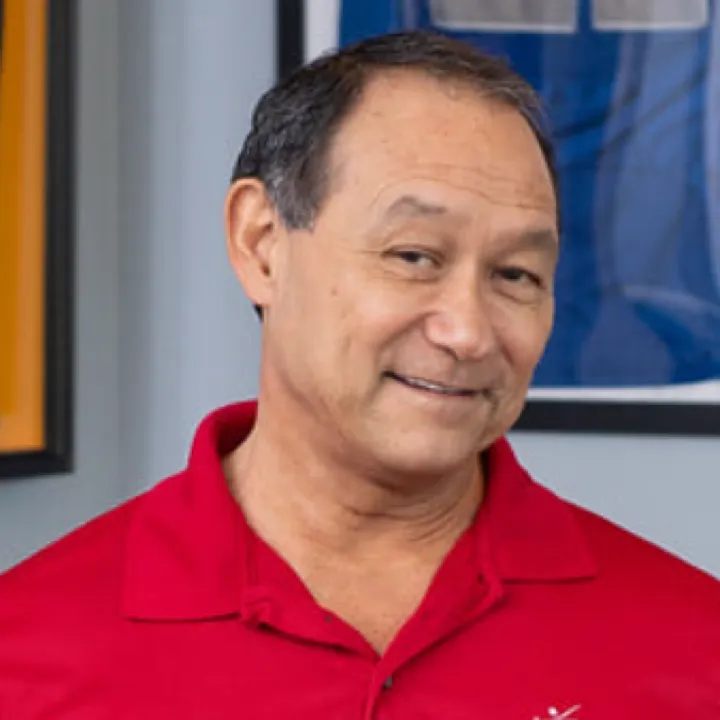
"What Tom is doing is amazing and he's helping a lot of people...you're the man dude."

"A down to earth, no nonsense way to get rid of pain, this training should be mandatory for every person in pain & those who treat them."

"This is one of the best methods I've seen over my entire career. I am amazed at what Tom teaches. "
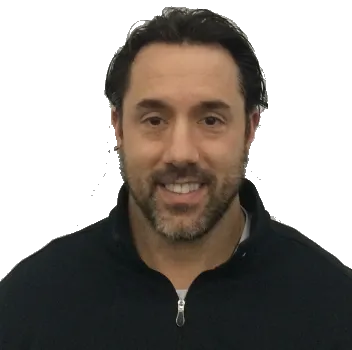
"This is a gold mine. Just one little known exercise Tom shared changed the way I train athletes. His whole model changes pain & performance education.

Lifetime access to The TMR seminar of your choice (Level 1–7)
Unlimited CEUs (if approved), get credit every time you retake
Retake the seminar anytime, updates included
Online seminars that count as Live Seminars when you start and finish within 9 days.
From fundamentals to Master Certification — one purchase unlocks everything.
Rewatch any lesson anytime. New updates included — no extra fees.
Retake seminars for credit as often as you like — unlimited accumulation.
Clinician-friendly format. Progress at your pace without travel costs.
Treat far from the painful site and watch motion return where it matters.
Stand out with measurable results, fewer visits, and higher retention.
Most CEU courses give you credits. TMR gives you credit and results your patients can feel today.
The seminar of your choice. Lifetime access. Retake unlimited times — your skills compound with every pass.
Unlimited CEUs (if approved). Yes, every retake can earn credit. No extra charge.
Backed by 15,000+ clinicians and outcomes across stubborn cases that didn’t budge elsewhere.
The seminar of your choice unlocked
Lifetime access & updates
Unlimited CEUs (if approved)
The Clear 7-Step Routine for Any Condition
In Total Motion Release, the Clear 7-Step Routine is designed to work for every condition—whether it’s orthopedic, neurological, pediatric, acute, or chronic.
This routine covers all the bases and stays the same regardless of the issue you’re addressing.
You’ll practice the routine in two key body positions until it becomes second nature, giving you consistent, predictable results no matter the condition.
Each of the 15 lessons builds on the last, helping you unlock deeper restriction levels as you go.
Understanding Tissue Function
The Clear 7-Step Routine is based on a core principle of how tissue functions.
You’ll learn tissue moves in only two directions to release tension and pain.
Once you understand this, you’ll see why the routine is so effective across various conditions.
The Role of the 9 Tissues in Pain Relief
You’ll dive into how different tissues respond to pain.
Specifically, 7 types of tissues respond best when they shorten (moving into comfort), and 2 prefer lengthening (moving into restriction).
This understanding will help you approach pain and restrictions in a more targeted way.
6 Core Movements Behind All Motion
What might surprise you is that all body movements come from just 6 basic motions.
These 6 core movements, combined with 4 directions and 3 joint positions, form the foundation of every motion.
We call these the FAB 6 and Super 6 (regulars and alternates).
Mastering these significantly shortens the time it takes to get a result.
The Power of the 4 Opposites
The power of the 4 Opposites is a major part of TMR.
You’ll learn how to use the 4 opposite motions to uncover hidden restrictions, find the parts of the body that move the best, and discover more potential solutions to any condition.
Quick 3-Segment Body Scan
You’ll learn a simple, quick body scan broken into 3 segments.
This method lets you observe how different body parts interact—like a pulley and lever system—helping you pinpoint the connections that cause or relieve pain.
Focusing on 4 Body Regions
To get long-lasting results, it’s important to address all four key regions of the body, not just the painful area.
Focusing only on the injured area uses just 12.5% of the body’s healing potential.
By working with the 3 non-painful regions and their good sided movement, you’ll witness the body’s interconnectedness and how quickly it can impact the problem area.
Adjusting with 3 Proven Rules
You will learn 3 simple, effective rules for adjusting the routine based on a patient’s response—whether they improve, stay the same, or get worse.
These rules cover all possible outcomes during treatment and are clearly outlined on a single sheet for easy reference.
This structured approach eliminates guesswork, guiding you on when to modify or change exercises.
Fine-Tuning for Maximum Effectiveness
You’ll explore how to fine-tune each motion to get the best possible results.
This includes understanding the right timing for each exercise and learning 6 reliable tweaks to optimize effectiveness.
Precision in both timing and adjustments is key to success here.
Joint Progressions to Reach Deeper Restrictions
You’ll work with 3 joint progressions that help you address deeper restriction levels.
By mastering these, you’ll simplify even the most complex conditions.
Targeting Areas With Changing 2 Key Joints
You’ll see how changing just 2 specific joints in the body while moving can precisely target areas that need attention.
This gives you a way to zero in on issues with high accuracy.
Unlocking Overlooked Concepts
By the end of the course, you’ll understand key concepts about pain and healing that missed in your even your most prestigious clinical programs, fellowship programs & seminars.
These insights are truly how the body is constantly trying to heal.
You’ll start seeing better results—and faster—than ever before.
In fact, within the first week, you’ll experience more “ah-ha” moments with your patients than you have in the past year.
Expanding the 7-Step Routine In The 5 Remaining Body Positions
In Level 2, the focus shifts to applying the 7-Step Routine to the remaining 5 of the 7 key body positions.
This level serves two main purposes: helping individuals with limited mobility, like infants, toddlers, or frail seniors, and facilitating recovery in positions where gravity plays a lesser role—think lying on your back after a back injury.
It also enhances performance for athletic or high-functioning individuals.
You’ll be working with the same motions you learned in Level 1 (The FAB 6 and Super 6), but now applied to these additional body positions.
The lessons take you through each position step by step.Beyond that, Level 2 introduces new concepts like applying TMR to plyometric or athletic movements, using transitions between positions as part of treatment, and even developing ambidextrous abilities for functional or sports-related tasks.
By the end of TMR Level 2, you’ll have a complete understanding of how all motions can be applied to help the body heal.
You’ll also see how the Power of the 4 Opposites gives you the full range of solutions for any situation.
The Advanced Layer
These concepts aren’t available anywhere else.
You’ll learn how to assess every joint from a 360-degree perspective to uncover its full healing potential.
You'll also dive into 3-dimensional trigger point release, focusing on the 3 segments of the body to ensure the pain stays gone.
You’ll explore how static sleeping and body positions can help relieve pain with minimal effort, and how applying resistance in specific directions can speed up recovery.
Another key idea is identifying the most restricted position in the 3 body segments and using the most effective motion to release overall tightness.
This can turn into a quick, 5-minute treatment that’s incredibly effective.
You’ll also learn how to use weight lifting as a treatment tool, particularly for patients with lower-paying insurance, achieving superior results compared to conventional treatments.
One of the most valuable insights in Level 3 is the ACE Card—a method for treating patients in severe pain, the kind that might otherwise seem like it requires surgery.
This offers you a new approach to handling those extreme cases.
By the end of Level 3, you’ll have a rare understanding of the body’s overlooked healing mechanisms—elements that have been in plain sight but largely ignored until now.
How To Add TMR Into Manual Therapy, & Your Current Techniques. Also Deeper Dive Into Specific Conditions
This level will expand your understanding if you’ve thought of TMR as just a corrective exercise system using the FAB 6 and Super 6.
In Level 4, you’ll learn how to integrate TMR principles with other modalities you already use, or those popular in the field, to amplify their effectiveness significantly and dive deeper in fixing specific conditions.
Even if you’re an expert in other techniques, you’ll see how TMR multiplies your results sevenfold with any technique you currently use.
At this stage, you’ll realize that the concepts behind TMR are the foundation of everything we do as clinicians. It’s essentially the Scientific Method for pain relief and performance enhancement, laid out to show you how to use any part of the body—near or far from the pain site—to accelerate healing.
This method might feel familiar from your training, but it’s finally being fully shown, as so few have noticed what’s been in plain sight all along.
In this level, you’ll apply the TMR concepts more deeply to specific conditions and techniques.
What You’ll Learn:
TMR Introduction:
How to boost results by applying the 7 Steps of Rehab across all types of treatments.
TMR Spine:
Enhance your spine treatments by using prone press-ups (McKenzie Method) and supine flexion (Williams Flexion), while testing the whole body in these two positions.
TMR Neck & Jaw:
Improve neck and jaw function through neck protraction and retraction (McKenzie Method), integrating these with other 3D movements for full-body impact.
TMR Shoulder:
Use injured side motions and unilateral stances to improve outcomes for shoulder issues (Mulligan Method).TMR Hip: To enhance hip function (Mulligan Method), apply similar techniques to injured side motions and unilateral stances.
TMR Knee, Foot, Ankle:
Get specific when working with these joints to achieve better results.
TMR Arm, Elbow, Wrist, Hand:
Learn targeted strategies for treating these areas more effectively.
Our Stand Alone Manual Therapy Process:
Discover how spring testing can simplify and streamline complex manual therapy techniques. So easy a kid could do it on their parent.
Once you’ve completed Level 4, you’ll be certified to use TMRc after your name, demonstrating mastery of the Total Motion Release system and its wide-ranging applications.
TMR Fitness
Learn why reviewing each person’s fitness routine is critical for long-term results.
You’ll discover how to create a full weight-training routine with a TMR twist that ensures lasting improvements.
TMR Posture:
Understand how addressing posture can improve spine pain by up to 50%, even without further treatment. You’ll also find out how neglecting posture can be a key reason pain keeps coming back.
TMR Initial Evaluations:
Learn different ways to conduct evaluations—whether you need to speed them up, make them more thorough, or cover more of the body in less time.
You’ll also discover how a misunderstanding of movements can lead to patient cancellations.
TMR Core:
If core exercises are still part of your routine, we’ll compare the traditional approach to core training with the TMR method and show you how TMR can enhance core treatment.
TMR Stretching
We’ll explore whether stretching really works and when it may actually cause more harm than good.
You’ll also participate in a group test to see who gets better results—those who stretch tight muscles or those who work the opposite extremity.
TMR Massage
Learn how to scan the entire body during a massage, finding both “yummy” (good) and “yucky” (problematic) areas.
You’ll flip the traditional massage approach by using the good areas to address the bad.
TMR Life Skills as Treatment:
Use daily activities, like transitioning from kneeling to standing, as exercises to help patients fix themselves.
This is especially helpful for those with repetitive daily motions.
TMR 3D Combos:
Get the entire body moving at once for faster healing.
We’ll combine all the bad motions and then treat them with all the good motions in all three body areas.
TMR 7 Steps Home Program:
Learn how to answer any patient question using the 7 Steps to Fixing Self document.
This one-page guide simplifies your treatment plan, reducing stress and confusion for both you and the patient.
TMR Power Motions:
Practice body resistance exercises by pushing on specific parts of the extremities and trunk to trigger faster changes.
TMR Positioning:
Explore full-body passive positions that improve results without effort—ideal for patients who can’t perform active movements.
TMR Foam Rolling
Bring a foam roller and learn how to roll out muscle knots the TMR way.
You’ll see motion and muscle tenderness improve by focusing on what feels good.
TMR Injury Training:
Learn techniques to rapidly improve sports injuries, getting athletes back into action faster than expected.
TMR Ambidextrous:
Practice activities that develop ambidexterity in sports, writing, and other tasks.
It’s a great way to improve precision and performance on both sides of the body.
TMR Yoga:
Take the 26 Bikram yoga poses and apply TMR principles to them. You’ll also learn how to adapt these techniques to any yoga pose for improved results.
TMR Instruments:
Discover how TMR integrates with instrument-assisted soft tissue mobilization.
You’ll see how "scraping" one part of the body can improve mobility in another—like using a hamstring to fix a bicep issue.
The TMR Master Certification:
This offers an advanced level of training that surpasses even the most prestigious seminars and clinical fellowships—at a fraction of the cost.
Finish TMR Levels 1-7 and after completion you can use the initial TMRmc after your name.
Here is what is in TMR Level 7:
TMR Advanced 7 Steps & Daily Note:
This advanced session goes deeper into the 7 Steps and Daily Note, with detailed demonstrations and hands-on practice to refine your understanding and application of these core techniques.
TMR Vertigo:
Learn how to apply TMR techniques to treat vertigo through demonstrations and hands-on practice.
TMR Flow:
Experience and practice TMR Flow, a method similar to self-administered unwinding that promotes natural body movement.
TMR Trigger: PointsUnderstand how TMR works with trigger points through practical demonstrations and sessions focused on effective application.
TMR Gait:
Explore how TMR improves gait through hands-on practice and demonstrations, showing how these techniques can enhance walking patterns.
TMR Ace Card: AdvancedLearn a method for treating patients in severe pain, including cases that might typically require surgery. This approach gives you new options for handling extreme conditions.
TMR Weight Training:
Expanded and practical demonstration of how to use TMR weight training as a treatment protocol, especially for patients with low-paying insurance.
TMR 1-to-Many Online:
Learn how to use TMR in an online group setting. This session covers how to teach your own TMR class, either as a way to generate additional income or to attract more clients to your practice.
Physical Therapists & Assistants
Occupational Therapists & Assistants
Athletic Trainers
Chiropractors
Massage Therapists
Also Recommended For:
Physicians
Physician Assistants
Dentists
Sport Coaches
Start course and finish in under 9 days for live credit
(Live credit for all professions except massage therapist who receive Live Online Credit only - see video for details)
Get home study/online credit if course completed in more than 9 days. MTs your association does not allow home study credit - see video for details
Start any course at your convenience
Time limit to take course does not expire.
Implement techniques immediately in your practice
As a fomer math teacher I was flown all over the country to learn how to teach other teachers how to get students to be able to apply what they learn.
The Online Seminars use what is called - Apprentice Style Learning... which is the premiere way to teach so students leave with the ability to apply what is taught right away.
Each student is taught by the creator himself through 2-5 min video demonstrations, followed by student practice, then adequate time for constructive feedback
It will feel like you have me looking over your shoulder helping you every step of the way.
Physical Therapists & Assistants
Occupational Therapists & Assistants
Athletic Trainers
Chiropractors
Massage Therapists - able to get Live Online Credit Only
Nurses
Physicians
Physician Assistants
Dentists
Sports Coaches
Personal Trainers
Bank 112 CEU credits immediately (16 credits per level)
Retake any course for fresh credits any new 2 year cycle.
Save thousands on future continuing education
Start any course instantly - no set schedules
Choose between live credit (<9 days) or home study format
Access courses 24/7 from any device
Pause, rewind, and review at your pace
Personal guidance from Tom Dalonzo-Baker
Get your tough cases solved
Fast-track your mastery with expert mentoring
Review techniques anytime you need a refresh
Download all course materials and resources
Stay updated as new content is added
Practice at your own pace

2. When your cohort of 100 clinicians fills (out of the total 1,000), you get full access immediately.
4. These groups of 100 usually fill by month-end, so you’re typically inside within a few weeks.
If you’ve ever wanted to treat pain differently, stop paying for CEUs, and have the founder in your corner long-term—this is it.
Let’s do this together.
Tom Dalonzo-Baker
Founder, Total Motion Release®
Start course and finish in under 9 days for live credit
(Live credit for all professions except massage therapist who receive Live Online Credit only - see video for details)
Get home study/online credit if course completed in more than 9 days. MTs your association does not allow home study credit - see video for details
Start any course at your convenience
Time limit to take course does not expire.
Implement techniques immediately in your practice
As a fomer math teacher I was flown all over the country to learn how to teach other teachers how to get students to be able to apply what they learn.
The Online Seminars use what is called - Apprentice Style Learning... which is the premiere way to teach so students leave with the ability to apply what is taught right away.
Each student is taught by the creator himself through 2-5 min video demonstrations, followed by student practice, then adequate time for constructive feedback
It will feel like you have me looking over your shoulder helping you every step of the way.
Con Ed Approved For:
Physical Therapists & Assistants
Occupational Therapists & Assistants
Athletic Trainers
Chiropractors
Massage Therapists
Also Recommended For:
Physicians
Physician Assistants
Dentists
Sport Coaches
Physical Therapists & Assistants
Occupational Therapists & Assistants
Athletic Trainers
Chiropractors
Massage Therapists - able to get Live Online Credit Only
Nurses
Physicians
Physician Assistants
Dentists
Sports Coaches
Personal Trainers
Bank 112 CEU credits immediately (16 credits per level)
Retake any course for fresh credits any new 2 year cycle.
Save thousands on future continuing education
Start any course instantly - no set schedules
Choose between live credit (<9 days) or home study format
Access courses 24/7 from any device
Pause, rewind, and review at your pace
Personal guidance from Tom Dalonzo-Baker
Get your tough cases solved
Fast-track your mastery with expert mentoring
Review techniques anytime you need a refresh
Download all course materials and resources
Stay updated as new content is added
Practice at your own pace
16 Credit Hrs Each
You will have lifetime unlimited continuing education.
Each course is worth 16 credit hours and there are 7 of them. For a total of 112 credit hours
You can retake them anytime and receive credit from most if not all cont ed approval boards (check with yours) as long as they are NOT taken in the same 2 year CEU cycle.
This is also great for those times you need those last minute CEU's you forgot to get.
Our courses can be taken as Live Credit if done in 9 days or less for all professions (except massage therapists)
Massage Therapist you only receive Live Online Credit.
If you want to take longer than 9 days then you will receive home study/online credit.
Massage therapists you are not allowed to get credit for home study. So you can take longer than 9 days, however you won't receive Cont Ed credit
Cont Ed credit is explained in more detail in video on this page under the Section titled:
"The Most Flexible Continuing Education You'll Ever Invest In"
Go Watch The Video!
You will have Lifetime Online Access to this training
You will have unlimited lifetime access via our App to the Founder of Total Motion Release (Tom Dalonzo-Baker). Get help with issues you are having on yourself or patients
The Clear 7-Step Routine for Any Condition
In Total Motion Release, the Clear 7-Step Routine is designed to work for every condition—whether it’s orthopedic, neurological, pediatric, acute, or chronic.
This routine covers all the bases and stays the same regardless of the issue you’re addressing.
You’ll practice the routine in two key body positions until it becomes second nature, giving you consistent, predictable results no matter the condition.
Each of the 15 lessons builds on the last, helping you unlock deeper restriction levels as you go.
Understanding Tissue Function
The Clear 7-Step Routine is based on a core principle of how tissue functions.
You’ll learn tissue moves in only two directions to release tension and pain.
Once you understand this, you’ll see why the routine is so effective across various conditions.
The Role of the 9 Tissues in Pain Relief
You’ll dive into how different tissues respond to pain.
Specifically, 7 types of tissues respond best when they shorten (moving into comfort), and 2 prefer lengthening (moving into restriction).
This understanding will help you approach pain and restrictions in a more targeted way.
6 Core Movements Behind All Motion
What might surprise you is that all body movements come from just 6 basic motions.
These 6 core movements, combined with 4 directions and 3 joint positions, form the foundation of every motion.
We call these the FAB 6 and Super 6 (regulars and alternates).
Mastering these significantly shortens the time it takes to get a result.
The Power of the 4 Opposites
The power of the 4 Opposites is a major part of TMR.
You’ll learn how to use the 4 opposite motions to uncover hidden restrictions, find the parts of the body that move the best, and discover more potential solutions to any condition.
Quick 3-Segment Body Scan
You’ll learn a simple, quick body scan broken into 3 segments.
This method lets you observe how different body parts interact—like a pulley and lever system—helping you pinpoint the connections that cause or relieve pain.
Focusing on 4 Body Regions
To get long-lasting results, it’s important to address all four key regions of the body, not just the painful area.
Focusing only on the injured area uses just 12.5% of the body’s healing potential.
By working with the 3 non-painful regions and their good sided movement, you’ll witness the body’s interconnectedness and how quickly it can impact the problem area.
Adjusting with 3 Proven Rules
You will learn 3 simple, effective rules for adjusting the routine based on a patient’s response—whether they improve, stay the same, or get worse.
These rules cover all possible outcomes during treatment and are clearly outlined on a single sheet for easy reference.
This structured approach eliminates guesswork, guiding you on when to modify or change exercises.
Fine-Tuning for Maximum Effectiveness
You’ll explore how to fine-tune each motion to get the best possible results.
This includes understanding the right timing for each exercise and learning 6 reliable tweaks to optimize effectiveness.
Precision in both timing and adjustments is key to success here.
Joint Progressions to Reach Deeper Restrictions
You’ll work with 3 joint progressions that help you address deeper restriction levels.
By mastering these, you’ll simplify even the most complex conditions.
Targeting Areas With Changing 2 Key Joints
You’ll see how changing just 2 specific joints in the body while moving can precisely target areas that need attention.
This gives you a way to zero in on issues with high accuracy.
Unlocking Overlooked Concepts
By the end of the course, you’ll understand key concepts about pain and healing that missed in your even your most prestigious clinical programs, fellowship programs & seminars.
These insights are truly how the body is constantly trying to heal.
You’ll start seeing better results—and faster—than ever before.
In fact, within the first week, you’ll experience more “ah-ha” moments with your patients than you have in the past year.
Expanding the 7-Step Routine In The 5 Remaining Body Positions
In Level 2, the focus shifts to applying the 7-Step Routine to the remaining 5 of the 7 key body positions.
This level serves two main purposes: helping individuals with limited mobility, like infants, toddlers, or frail seniors, and facilitating recovery in positions where gravity plays a lesser role—think lying on your back after a back injury.
It also enhances performance for athletic or high-functioning individuals.
You’ll be working with the same motions you learned in Level 1 (The FAB 6 and Super 6), but now applied to these additional body positions.
The lessons take you through each position step by step.Beyond that, Level 2 introduces new concepts like applying TMR to plyometric or athletic movements, using transitions between positions as part of treatment, and even developing ambidextrous abilities for functional or sports-related tasks.
By the end of TMR Level 2, you’ll have a complete understanding of how all motions can be applied to help the body heal.
You’ll also see how the Power of the 4 Opposites gives you the full range of solutions for any situation.
The Advanced Layer
These concepts aren’t available anywhere else.
You’ll learn how to assess every joint from a 360-degree perspective to uncover its full healing potential.
You'll also dive into 3-dimensional trigger point release, focusing on the 3 segments of the body to ensure the pain stays gone.
You’ll explore how static sleeping and body positions can help relieve pain with minimal effort, and how applying resistance in specific directions can speed up recovery.
Another key idea is identifying the most restricted position in the 3 body segments and using the most effective motion to release overall tightness.
This can turn into a quick, 5-minute treatment that’s incredibly effective.
You’ll also learn how to use weight lifting as a treatment tool, particularly for patients with lower-paying insurance, achieving superior results compared to conventional treatments.
One of the most valuable insights in Level 3 is the ACE Card—a method for treating patients in severe pain, the kind that might otherwise seem like it requires surgery.
This offers you a new approach to handling those extreme cases.
By the end of Level 3, you’ll have a rare understanding of the body’s overlooked healing mechanisms—elements that have been in plain sight but largely ignored until now.
How To Add TMR Into Manual Therapy, & Your Current Techniques. Also Deeper Dive Into Specific Conditions
This level will expand your understanding if you’ve thought of TMR as just a corrective exercise system using the FAB 6 and Super 6.
In Level 4, you’ll learn how to integrate TMR principles with other modalities you already use, or those popular in the field, to amplify their effectiveness significantly and dive deeper in fixing specific conditions.
Even if you’re an expert in other techniques, you’ll see how TMR multiplies your results sevenfold with any technique you currently use.
At this stage, you’ll realize that the concepts behind TMR are the foundation of everything we do as clinicians. It’s essentially the Scientific Method for pain relief and performance enhancement, laid out to show you how to use any part of the body—near or far from the pain site—to accelerate healing.
This method might feel familiar from your training, but it’s finally being fully shown, as so few have noticed what’s been in plain sight all along.
In this level, you’ll apply the TMR concepts more deeply to specific conditions and techniques.
What You’ll Learn:
TMR Introduction:
How to boost results by applying the 7 Steps of Rehab across all types of treatments.
TMR Spine:
Enhance your spine treatments by using prone press-ups (McKenzie Method) and supine flexion (Williams Flexion), while testing the whole body in these two positions.
TMR Neck & Jaw:
Improve neck and jaw function through neck protraction and retraction (McKenzie Method), integrating these with other 3D movements for full-body impact.
TMR Shoulder:
Use injured side motions and unilateral stances to improve outcomes for shoulder issues (Mulligan Method).TMR Hip: To enhance hip function (Mulligan Method), apply similar techniques to injured side motions and unilateral stances.
TMR Knee, Foot, Ankle:
Get specific when working with these joints to achieve better results.
TMR Arm, Elbow, Wrist, Hand:
Learn targeted strategies for treating these areas more effectively.
Our Stand Alone Manual Therapy Process:
Discover how spring testing can simplify and streamline complex manual therapy techniques. So easy a kid could do it on their parent.
Once you’ve completed Level 4, you’ll be certified to use TMRc after your name, demonstrating mastery of the Total Motion Release system and its wide-ranging applications.
TMR Fitness
Learn why reviewing each person’s fitness routine is critical for long-term results.
You’ll discover how to create a full weight-training routine with a TMR twist that ensures lasting improvements.
TMR Posture:
Understand how addressing posture can improve spine pain by up to 50%, even without further treatment. You’ll also find out how neglecting posture can be a key reason pain keeps coming back.
TMR Initial Evaluations:
Learn different ways to conduct evaluations—whether you need to speed them up, make them more thorough, or cover more of the body in less time.
You’ll also discover how a misunderstanding of movements can lead to patient cancellations.
TMR Core:
If core exercises are still part of your routine, we’ll compare the traditional approach to core training with the TMR method and show you how TMR can enhance core treatment.
TMR Stretching
We’ll explore whether stretching really works and when it may actually cause more harm than good.
You’ll also participate in a group test to see who gets better results—those who stretch tight muscles or those who work the opposite extremity.
TMR Massage
Learn how to scan the entire body during a massage, finding both “yummy” (good) and “yucky” (problematic) areas.
You’ll flip the traditional massage approach by using the good areas to address the bad.
TMR Life Skills as Treatment:
Use daily activities, like transitioning from kneeling to standing, as exercises to help patients fix themselves.
This is especially helpful for those with repetitive daily motions.
TMR 3D Combos:
Get the entire body moving at once for faster healing.
We’ll combine all the bad motions and then treat them with all the good motions in all three body areas.
TMR 7 Steps Home Program:
Learn how to answer any patient question using the 7 Steps to Fixing Self document.
This one-page guide simplifies your treatment plan, reducing stress and confusion for both you and the patient.
TMR Power Motions:
Practice body resistance exercises by pushing on specific parts of the extremities and trunk to trigger faster changes.
TMR Positioning:
Explore full-body passive positions that improve results without effort—ideal for patients who can’t perform active movements.
TMR Foam Rolling
Bring a foam roller and learn how to roll out muscle knots the TMR way.
You’ll see motion and muscle tenderness improve by focusing on what feels good.
TMR Injury Training:
Learn techniques to rapidly improve sports injuries, getting athletes back into action faster than expected.
TMR Ambidextrous:
Practice activities that develop ambidexterity in sports, writing, and other tasks.
It’s a great way to improve precision and performance on both sides of the body.
TMR Yoga:
Take the 26 Bikram yoga poses and apply TMR principles to them. You’ll also learn how to adapt these techniques to any yoga pose for improved results.
TMR Instruments:
Discover how TMR integrates with instrument-assisted soft tissue mobilization.
You’ll see how "scraping" one part of the body can improve mobility in another—like using a hamstring to fix a bicep issue.
The TMR Master Certification:
This offers an advanced level of training that surpasses even the most prestigious seminars and clinical fellowships—at a fraction of the cost.
Finish TMR Levels 1-7 and after completion you can use the initial TMRmc after your name.
Here is what is in TMR Level 7:
TMR Advanced 7 Steps & Daily Note:
This advanced session goes deeper into the 7 Steps and Daily Note, with detailed demonstrations and hands-on practice to refine your understanding and application of these core techniques.
TMR Vertigo:
Learn how to apply TMR techniques to treat vertigo through demonstrations and hands-on practice.
TMR Flow:
Experience and practice TMR Flow, a method similar to self-administered unwinding that promotes natural body movement.
TMR Trigger: PointsUnderstand how TMR works with trigger points through practical demonstrations and sessions focused on effective application.
TMR Gait:
Explore how TMR improves gait through hands-on practice and demonstrations, showing how these techniques can enhance walking patterns.
TMR Ace Card: AdvancedLearn a method for treating patients in severe pain, including cases that might typically require surgery. This approach gives you new options for handling extreme conditions.
TMR Weight Training:
Expanded and practical demonstration of how to use TMR weight training as a treatment protocol, especially for patients with low-paying insurance.
TMR 1-to-Many Online:
Learn how to use TMR in an online group setting. This session covers how to teach your own TMR class, either as a way to generate additional income or to attract more clients to your practice.
Finish Levels 1-4
Be TMRc Certified
Finish Levels 1-7
Be TMRmc Master Certified
"What Tom is doing is amazing and he's helping a lot of people...you're the man dude."
"A down to earth, no nonsense way to get rid of pain, this training should be mandatory for every person in pain & those who treat them."
"This is one of the best methods I've seen over my entire career. I am amazed at what Tom teaches. "
"This is a gold mine. Just one little known exercise Tom shared changed the way I train athletes. His whole model changes pain & performance education.